HostelHive

UX Designer
Role
6 weeks
Timeline



Srun
Abhi
Shivam

Overview
Backpackers don’t just book beds they look for connection, shared experiences,
and spontaneous social moments while traveling. Hostellive helps travelers discover
hostel events happening across a city in one place, allowing them to join or host
events regardless of where they are staying.
Due to time constraints, the project focused on detailed wireframes and complete user
flows, with the UI design phase planned for the next stage.
Problem
While 8 out of 10 backpackers actively join hostel events, only around 30% of hostels
actually organize social experiences consistently.
This creates:
fragmented event discovery
missed social opportunities for travelers
operational challenges for hostels
As a result, travelers struggle to find activities nearby, even in highly social
backpacking destinations.

Research & Understanding
Backpackers interviewed
Age
-
Countries
Hostel operators interviewed



Market insight
Gen Z travelers value experiences over accommodation
Hostel culture thrives on social energy, yet discovery of events is broken.
Events are often:
Limited to one hostel
Poorly communicated (flyers, WhatsApp groups, word‑of‑mouth)
Missed by late arriving guests
Core problem
Backpackers want to socialize, but:
They don’t know what’s happening
They don’t know who will show up
They don’t feel confident hosting events themselves
Process
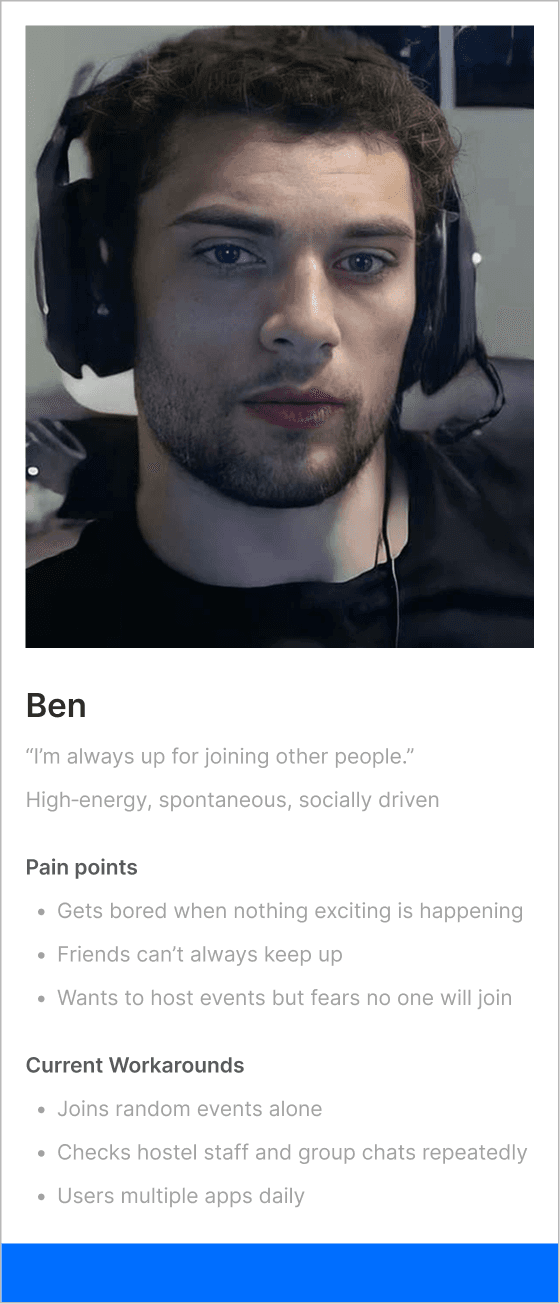
Before jumping into solutions, we noticed that not all backpackers seek the same kind of social experience.
Designing one generic “social feature” would either overwhelm some users or under-serve others.
To avoid designing for assumptions or personal bias, we clustered repeated behavior patterns from
interviews into clear behavioral archetypes. These are not fictional profiles, they are decision-making tools.


We mapped out Lonely Planet’s ecosystem of products and services as an easy way to understand and
visualise Lonely Planet’s offerings and to see if any areas of opportunity presented themselves.
Looking into The Lonely Planet’s ecosystem, we realised that our potential solution, being related to finding
food, fit within the “during travel” phase. Even products from Lonely Planet had covered this area, they were
guide books and recipe books, which didn’t relate to the ever changing needs and wants of Gen Z backpackers.
Our research also further indicated that Gen Z travellers were looking for more authentic traveller to traveller connections.

We reviewed existing solutions used by backpackers to discover social activities, including hostel-led
events, travel platforms, meetup tools, and social media. While these platforms partially solve event
discovery, none are designed around spontaneous, cross-hostel social experiences.

To define the scope of the MVP, we evaluated potential features based on user value, business relevance
and implementation effort. This helped us identify which features were essential for the initial experience
and which could be deferred.
Features that delivered high value with lower complexity were prioritised for the MVP, while others were
intentionally left for future iterations. This ensured the product remained focused, lightweight, and
realistic to build.
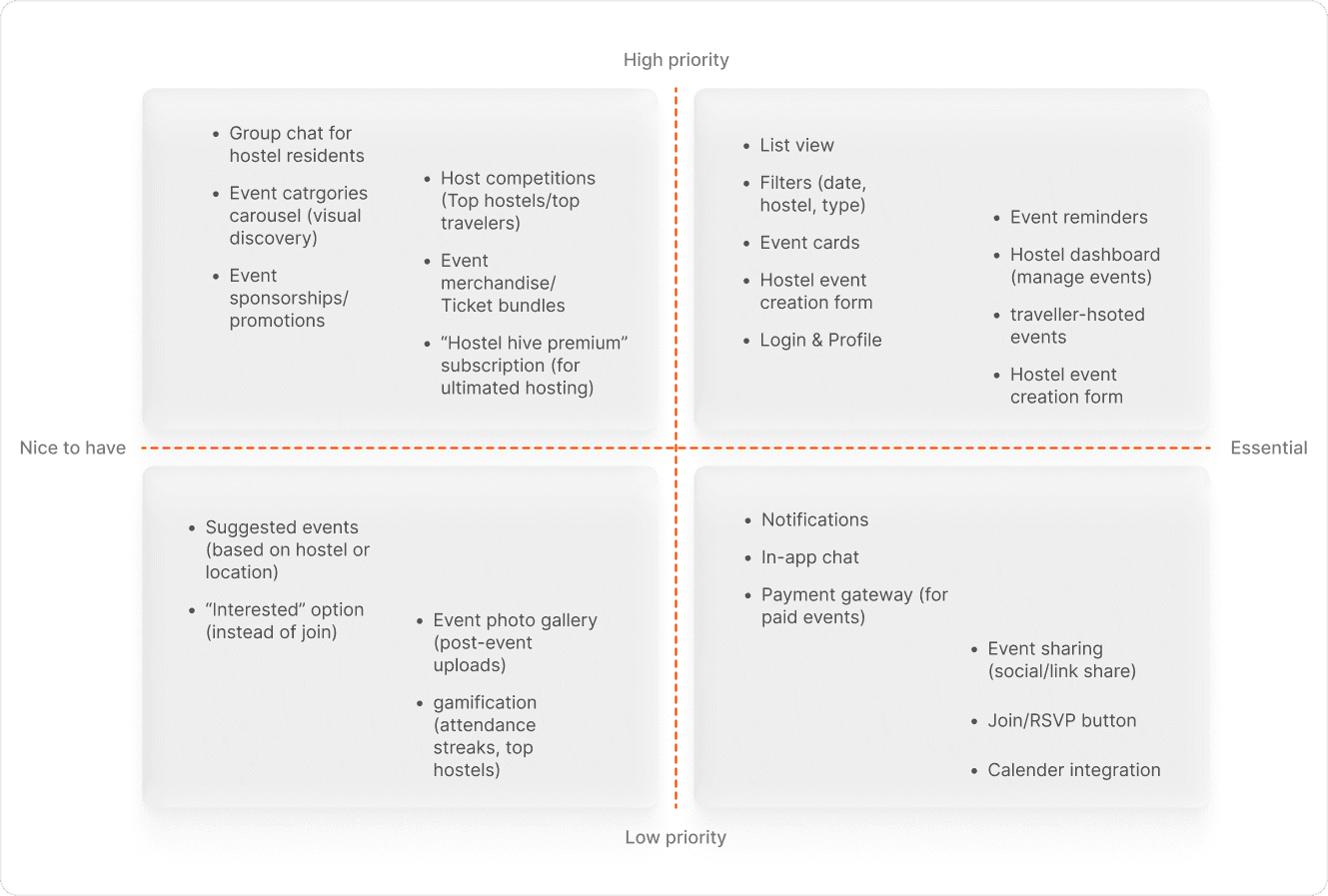
to view entire feature and functionality matrix,
Click here
To support quick decision-making in a travel context, the information architecture was kept intentionally
simple. The structure prioritises event discovery and participation, while keeping secondary actions
accessible without overwhelming the user.
Key sections were organised around core traveler goals like discovering events, managing participation,
and hosting events ensuring the experience remained clear even for first-time users.


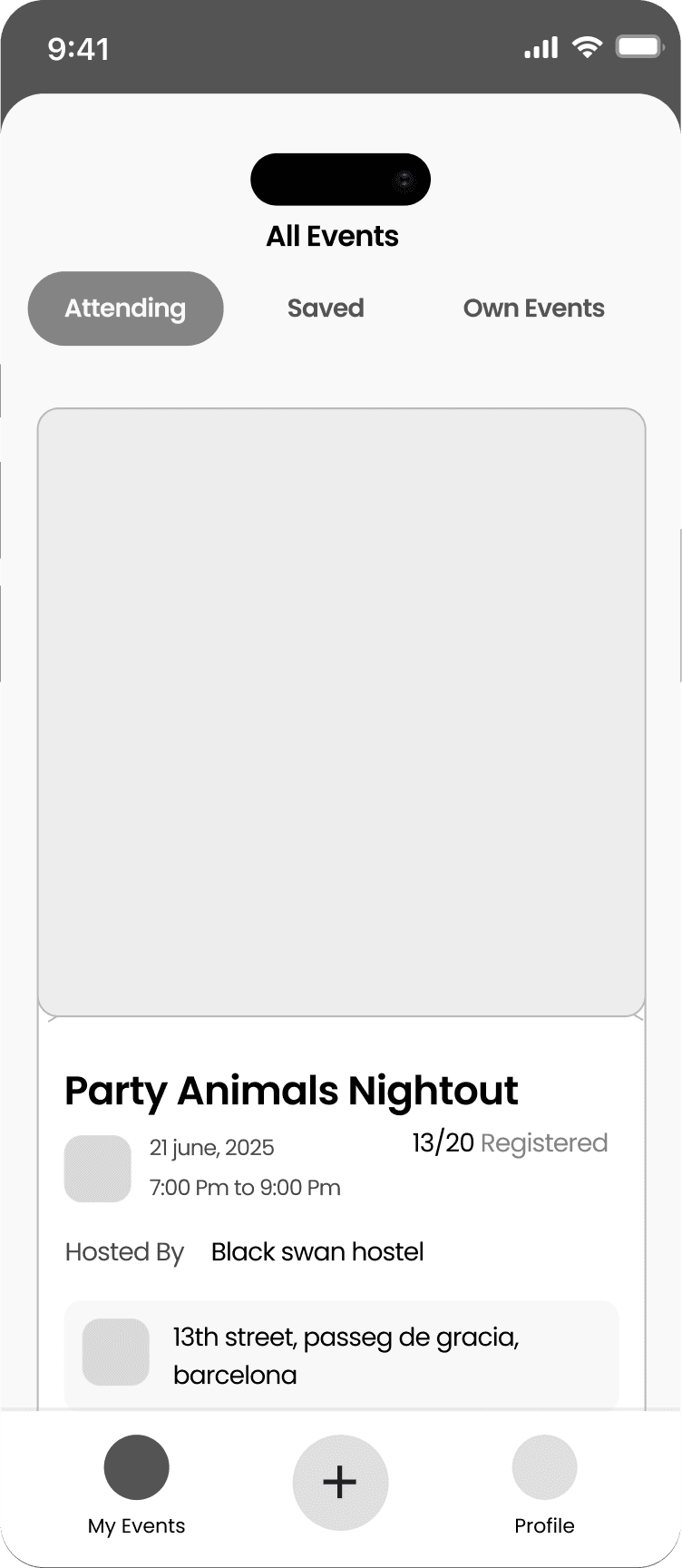
Final product
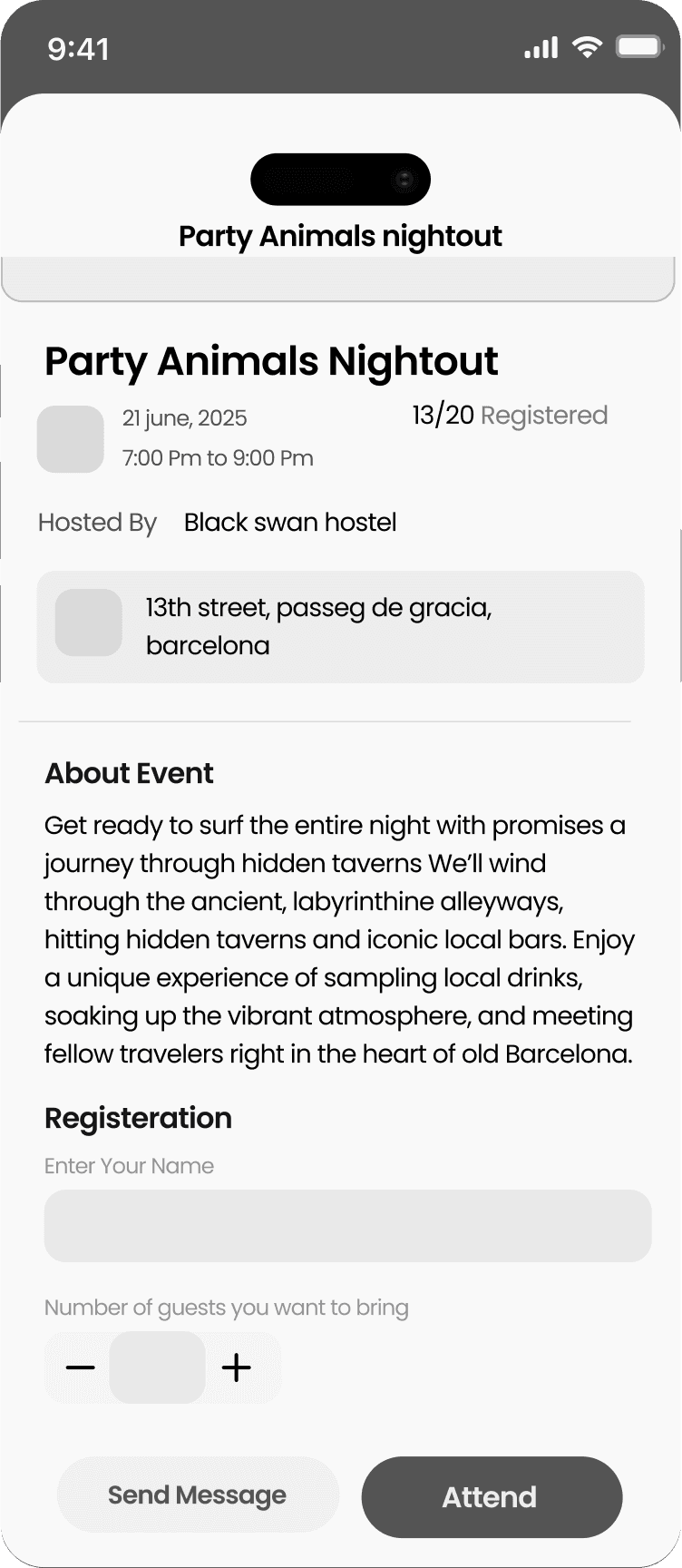
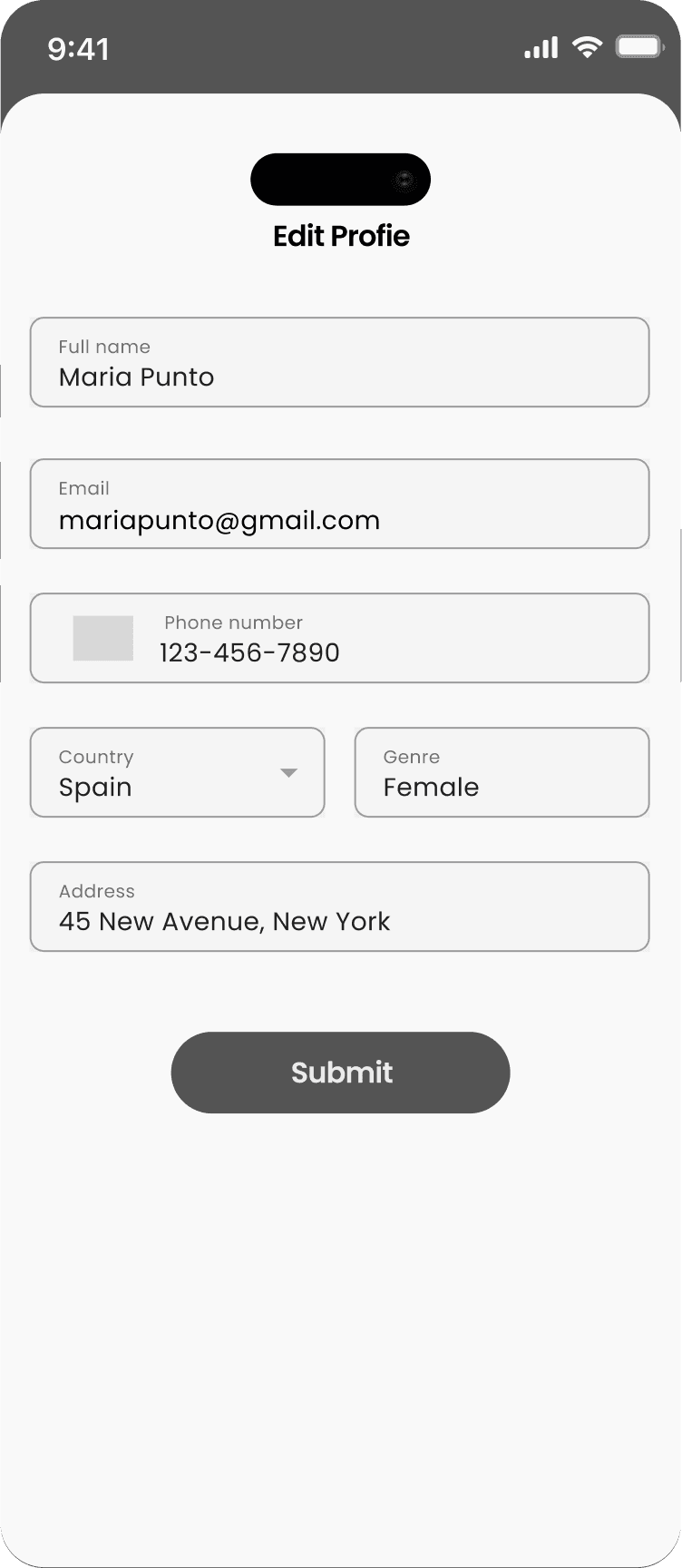
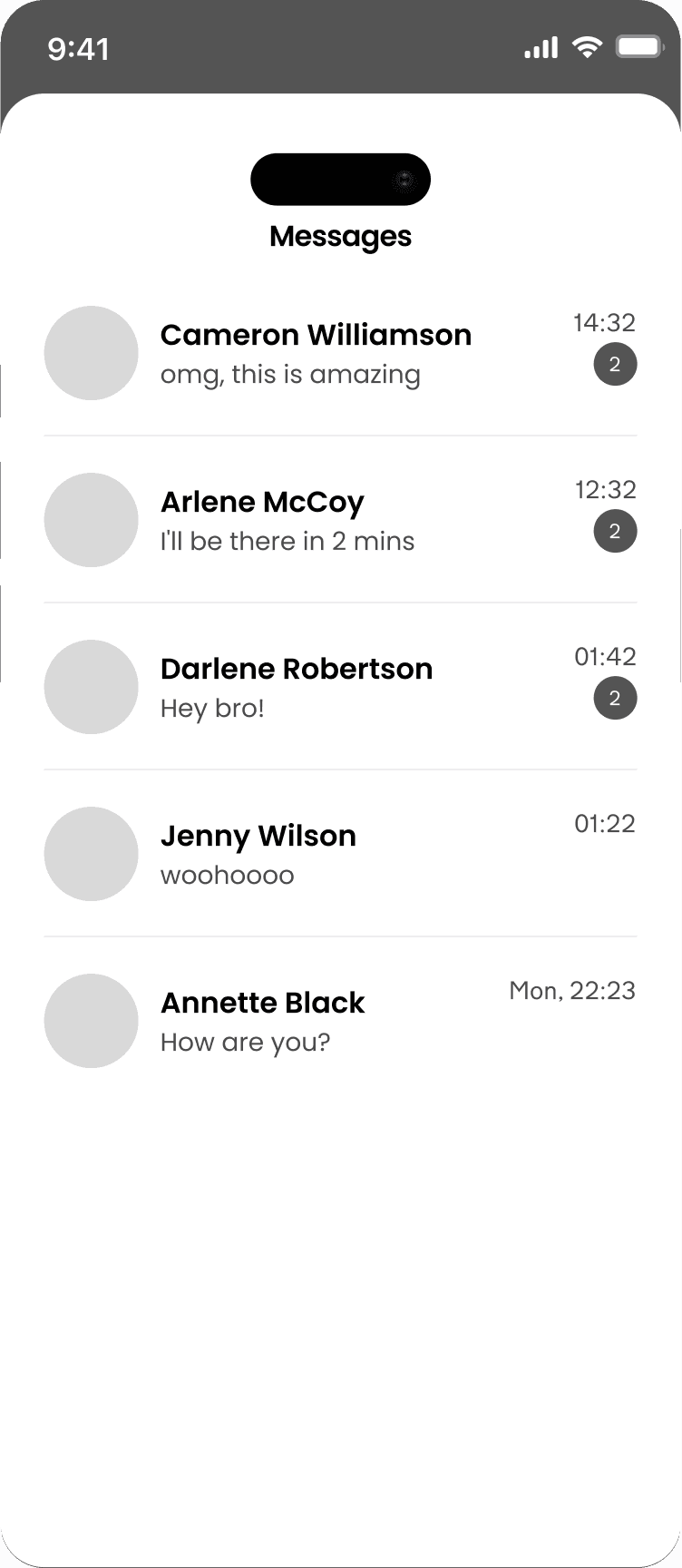
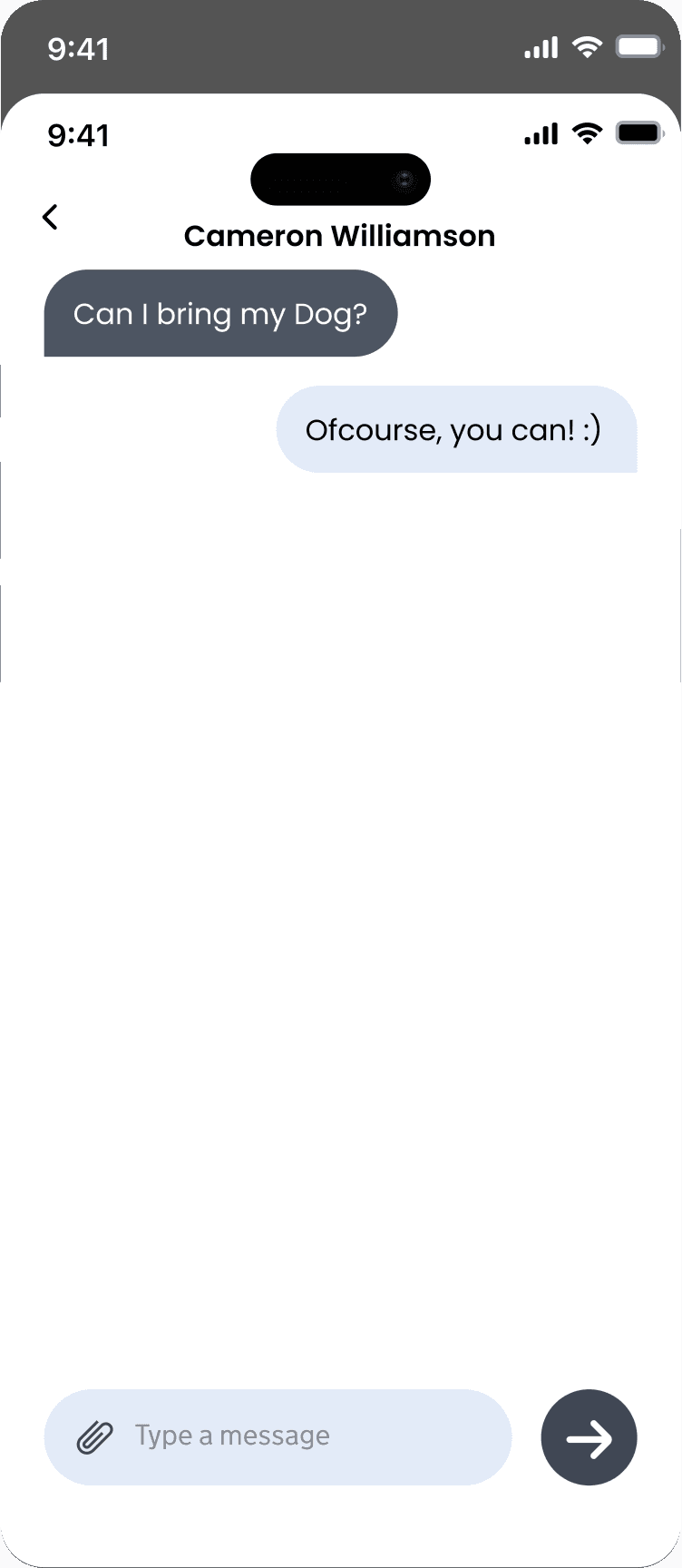
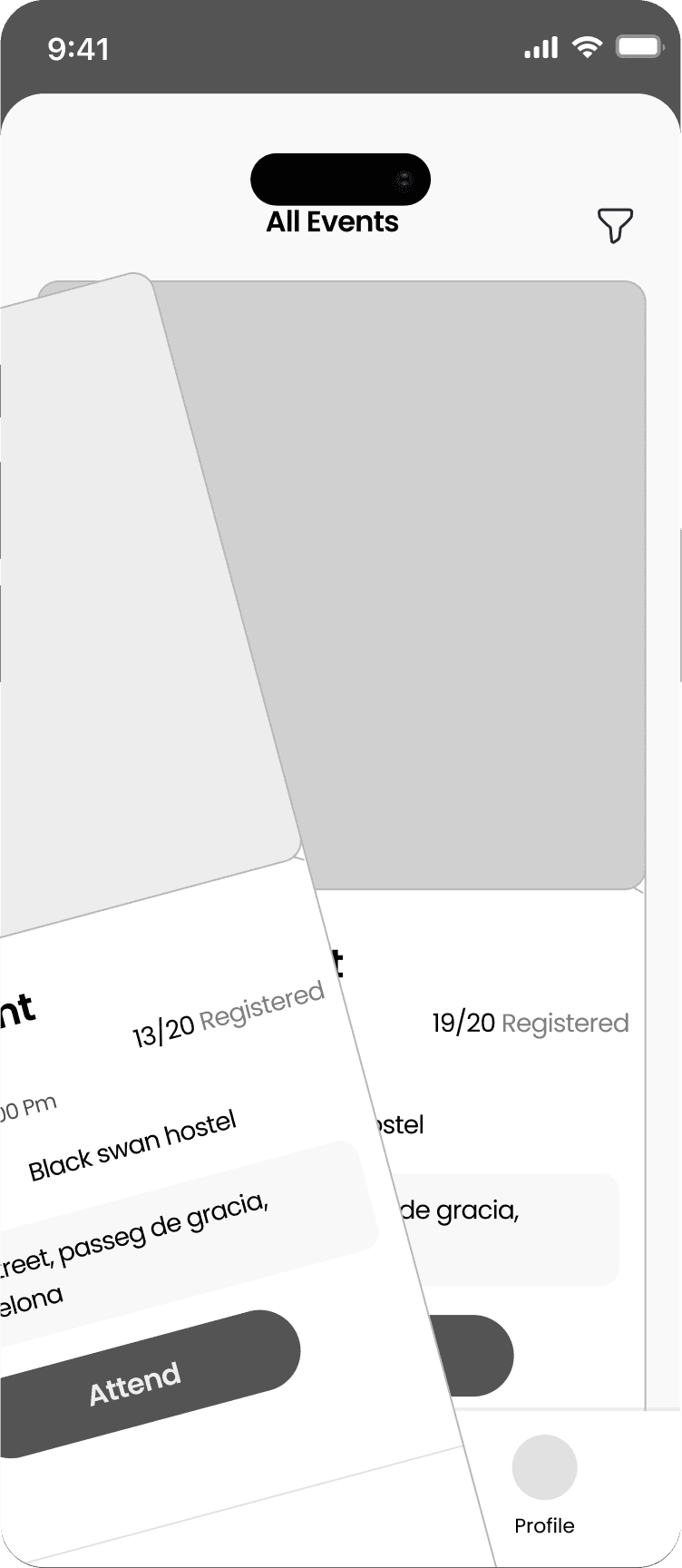
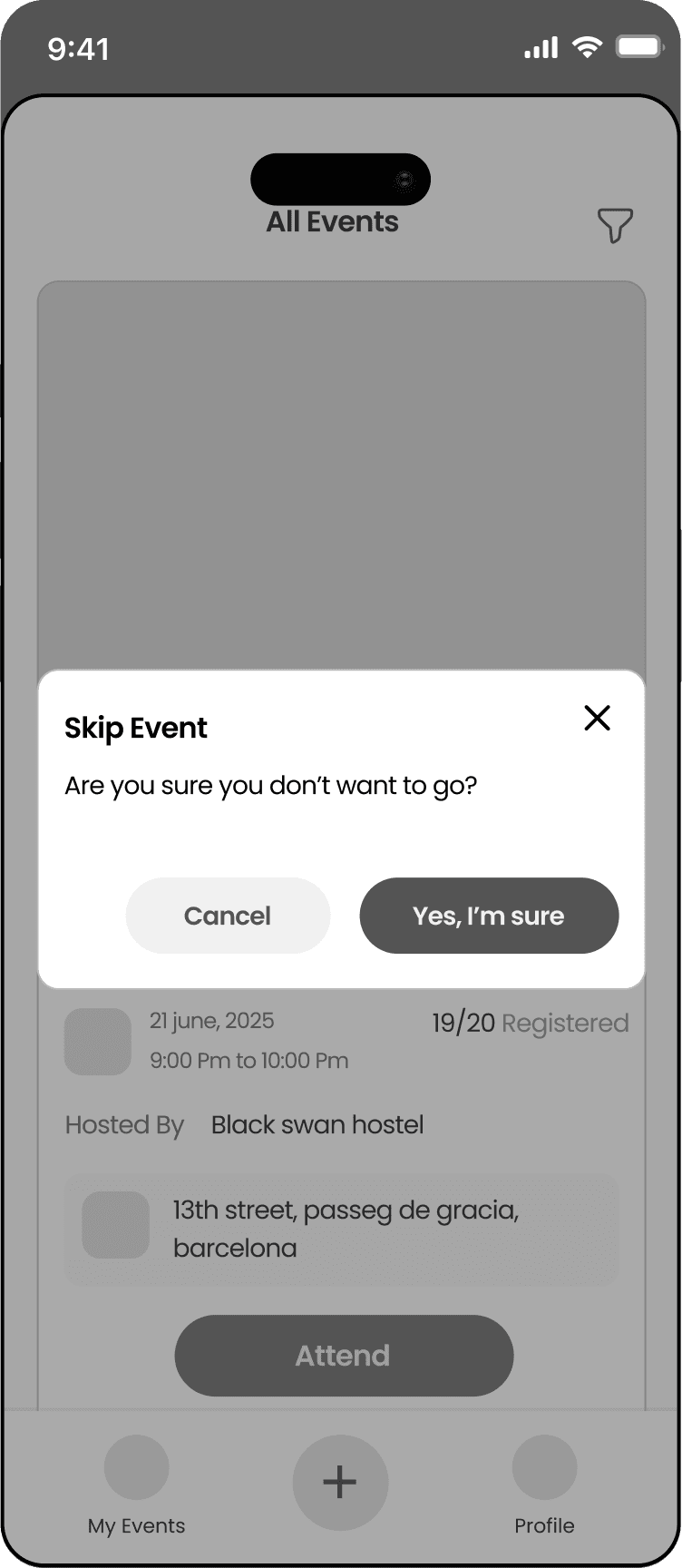
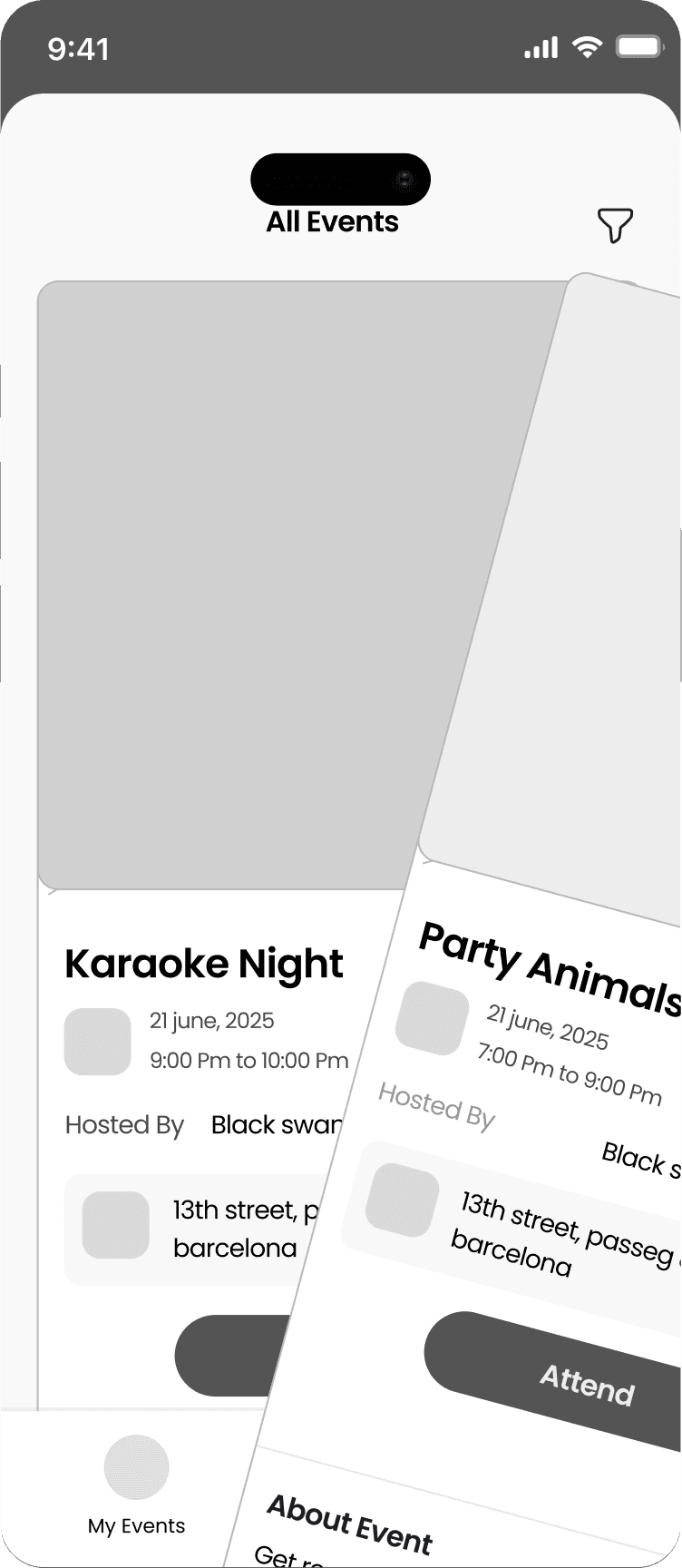
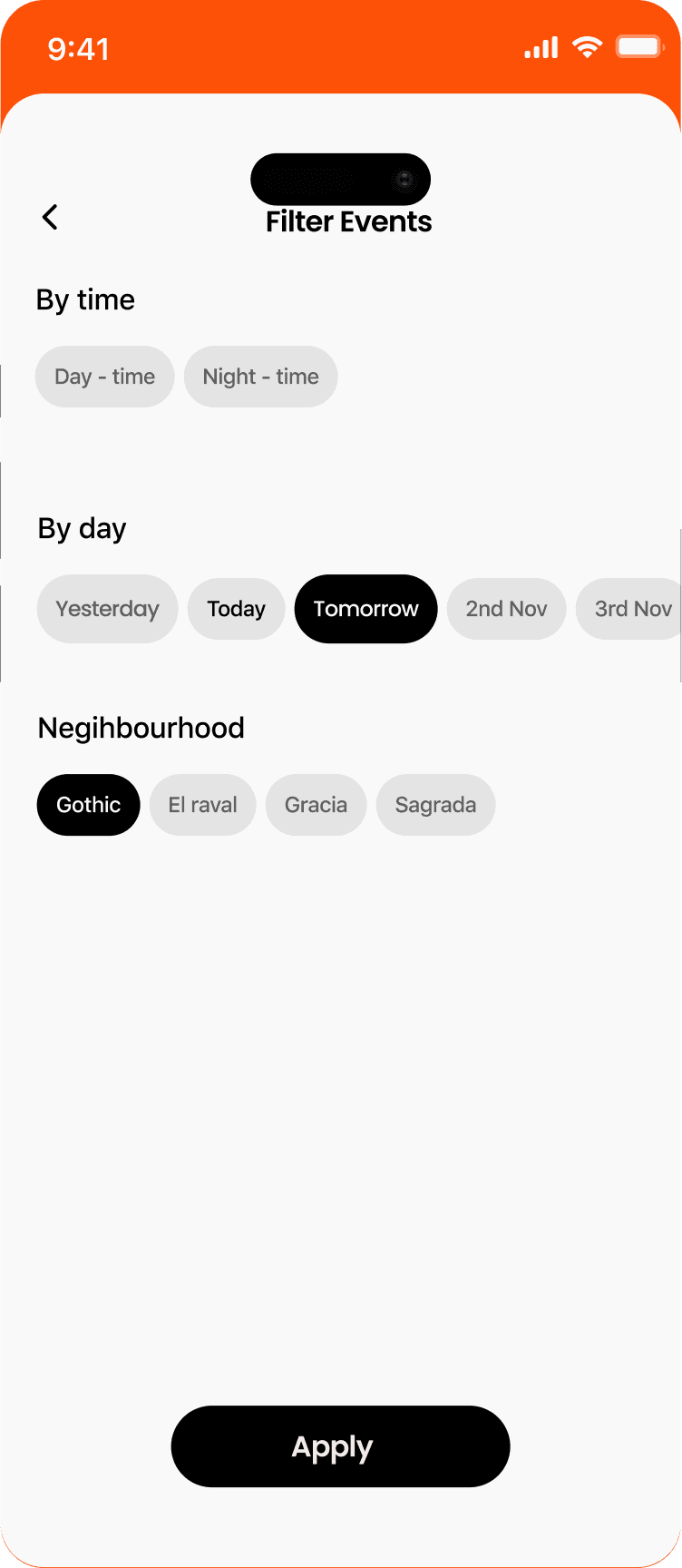
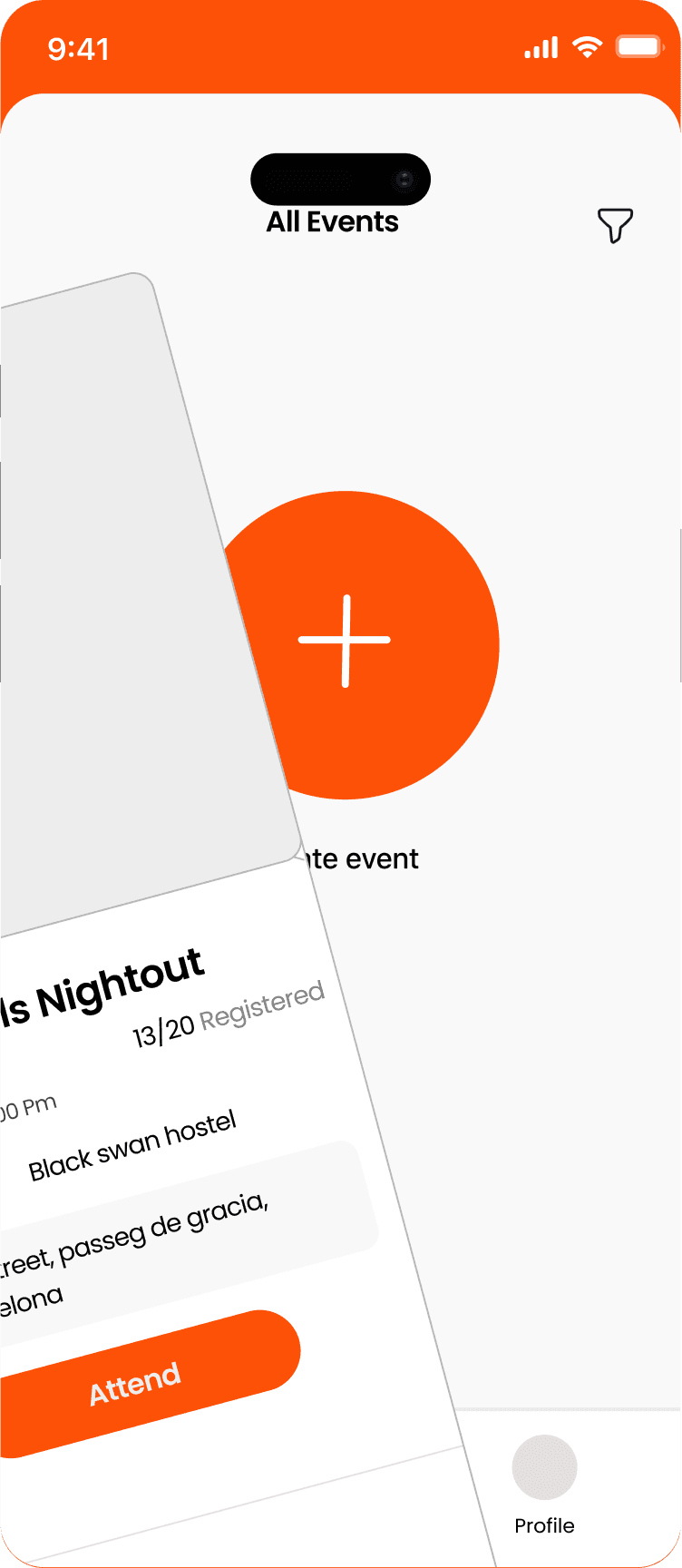
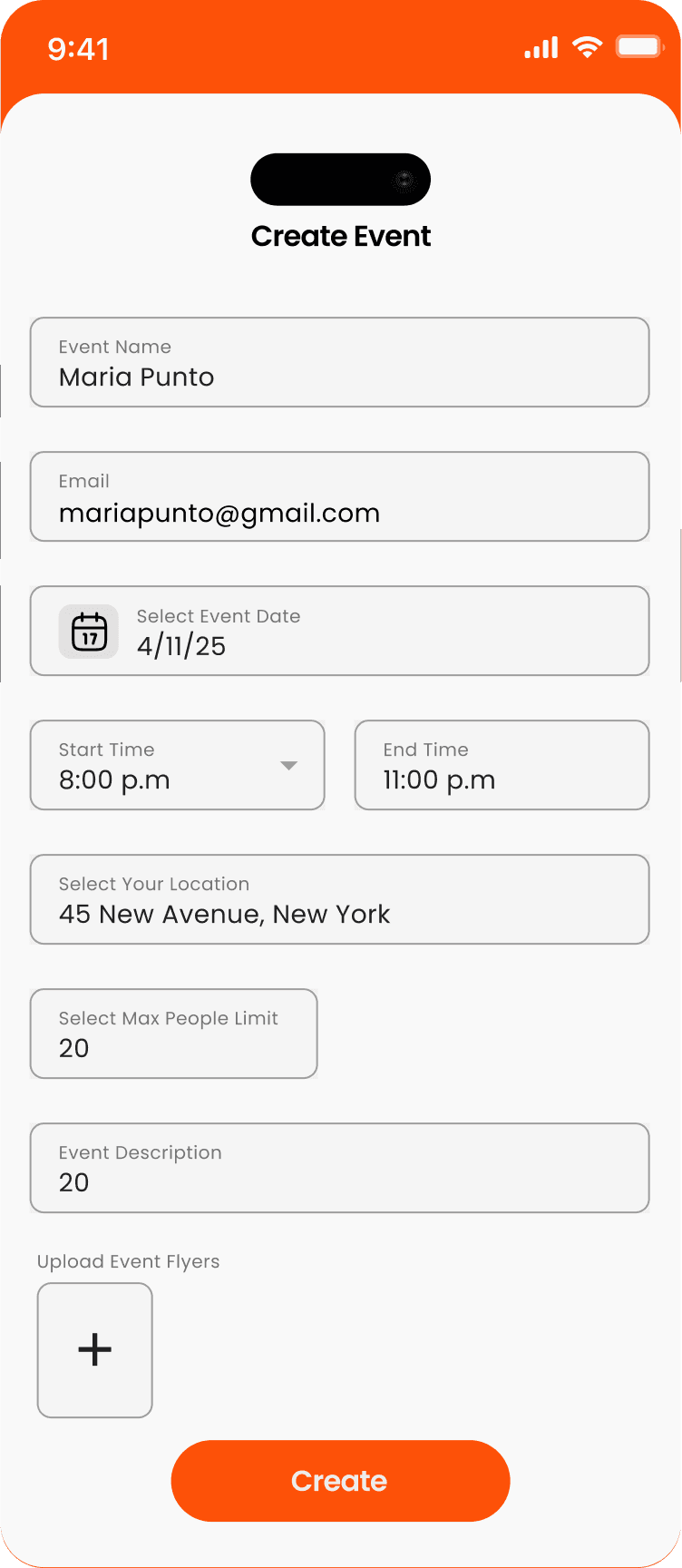
The final solution created a centralized platform for discovering hostel events across a city, making social experiences more accessible for backpackers regardless of where they stayed.













Thank you
